2020 Bathroom Design Trends Popular in West Lafayette
Believe it or not, we spend a significant amount of time in our bathrooms every year between showering, grooming, and “escaping” or relaxing....
7 min read
Andy Haste
:
June 18, 2026
Picture the end of a long day. You walk into your bathroom, flip on the light, and the room does nothing for you. Bright overhead fixture, a claustrophobic shower, countertops cluttered with everything that has nowhere else to go. The space is functional. It is clean. But it offers no sense of release. You finish your routine and move on, the same way you always do.
Now picture something different. Warm, layered light that you can dim to exactly what you need. A walk-in shower that feels generous and calm. Countertops clear. Everything stored away. A room that actually helps you exhale.
That difference, between a bathroom that works and a bathroom that restores you, is what a thoughtful remodel makes possible.
For many homeowners, the master bathroom becomes the focus once life settles in. When kids are younger, the hall bath takes the daily hits. When they leave for school or start their own lives, parents look around and realize the bathroom they use every single day has not been touched in decades. It still belongs to a version of your life that no longer exists. This is often the moment when a remodel stops being an idea and becomes a priority.
Before you look at a single tile sample or browse a showroom, there is a more useful question to answer first: how do you want this room to make you feel?
Most bathroom remodels begin with a Pinterest board or a product wish list. The best ones begin with a conversation about experience. A spa-like bathroom is not defined by a particular style. It is defined by the sensory qualities it creates: warmth, quiet, softness, ease. What produces that feeling is different for every homeowner.
For some people, the word luxury means a massive, beautifully designed shower with multiple spray settings and room to move. For others, it means a deep soaking tub with jets, soft light, and music playing from the wall. Neither answer is wrong. Both lead to very different design decisions, which is exactly why the conversation has to come before the choices.
Inspirational photos are a great starting point, and any images that capture the feeling you are after, whether from a design magazine or your phone's camera roll, help a designer understand what draws you in. If you have already remodeled other rooms in your home, those spaces often reveal your instincts better than words can. A designer who walks through your house before the bathroom conversation begins already knows a great deal about what will feel right to you.

No amount of beautiful material can compensate for a layout that feels cramped or poorly organized. The way a bathroom is arranged, how you move through it, where things are when you reach for them, shapes the experience of the room more than almost any finish you could choose.
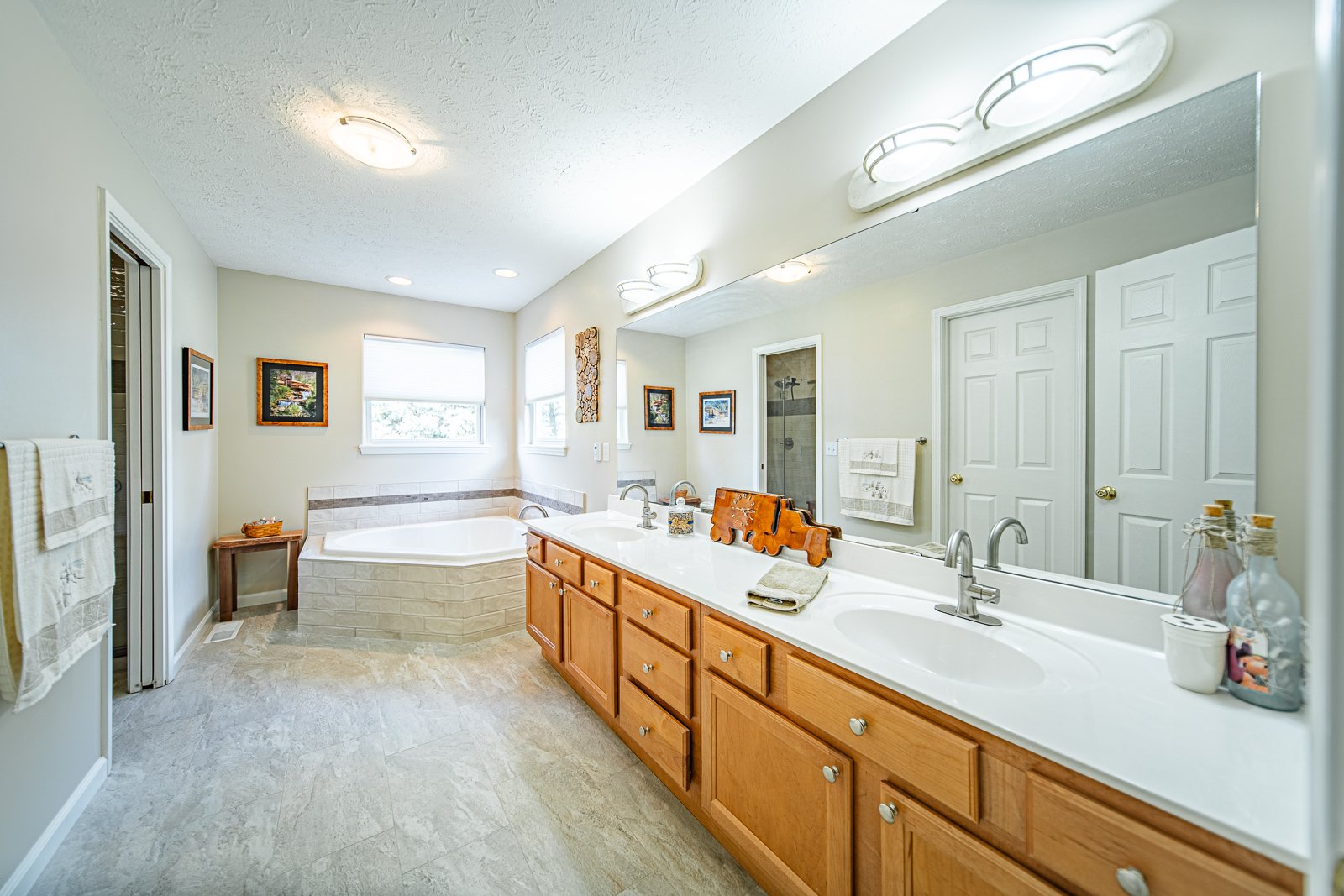
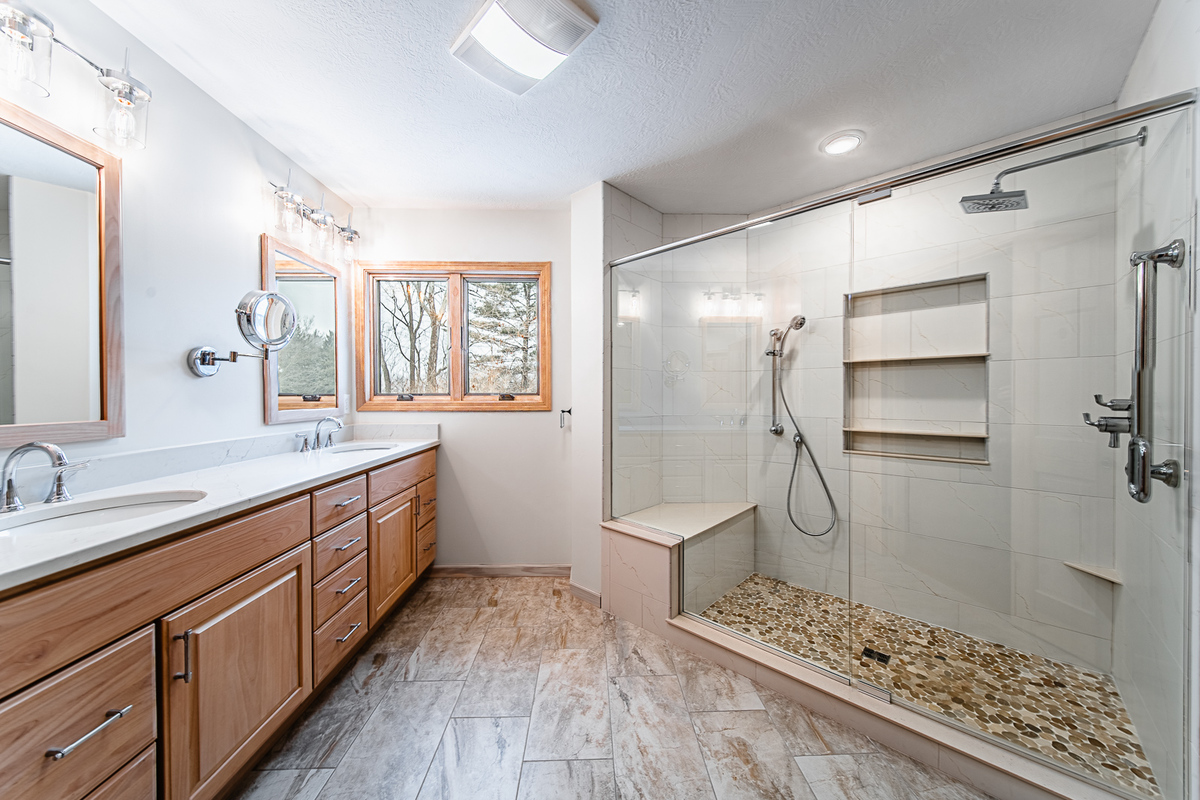
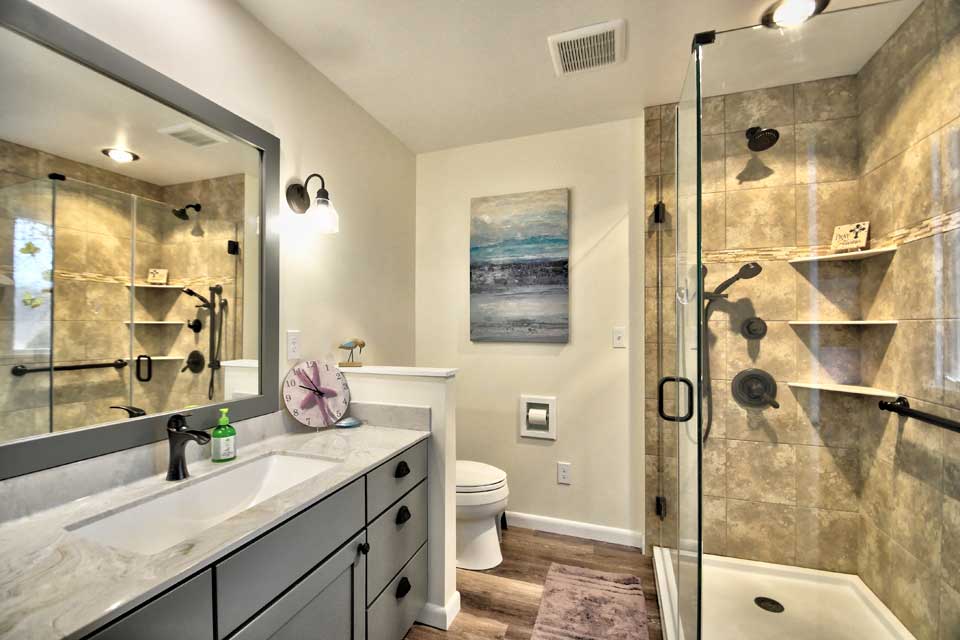
Walk-in showers are one of the most impactful changes a bathroom remodel can make. In many older homes, a massive corner garden tub sits largely unused while the shower beside it is barely large enough to turn around in. Most homeowners rarely, if ever, use those tubs. They take up an enormous amount of floor space, and removing them in favor of a generous, well-designed shower transforms both the function and the feel of the room.
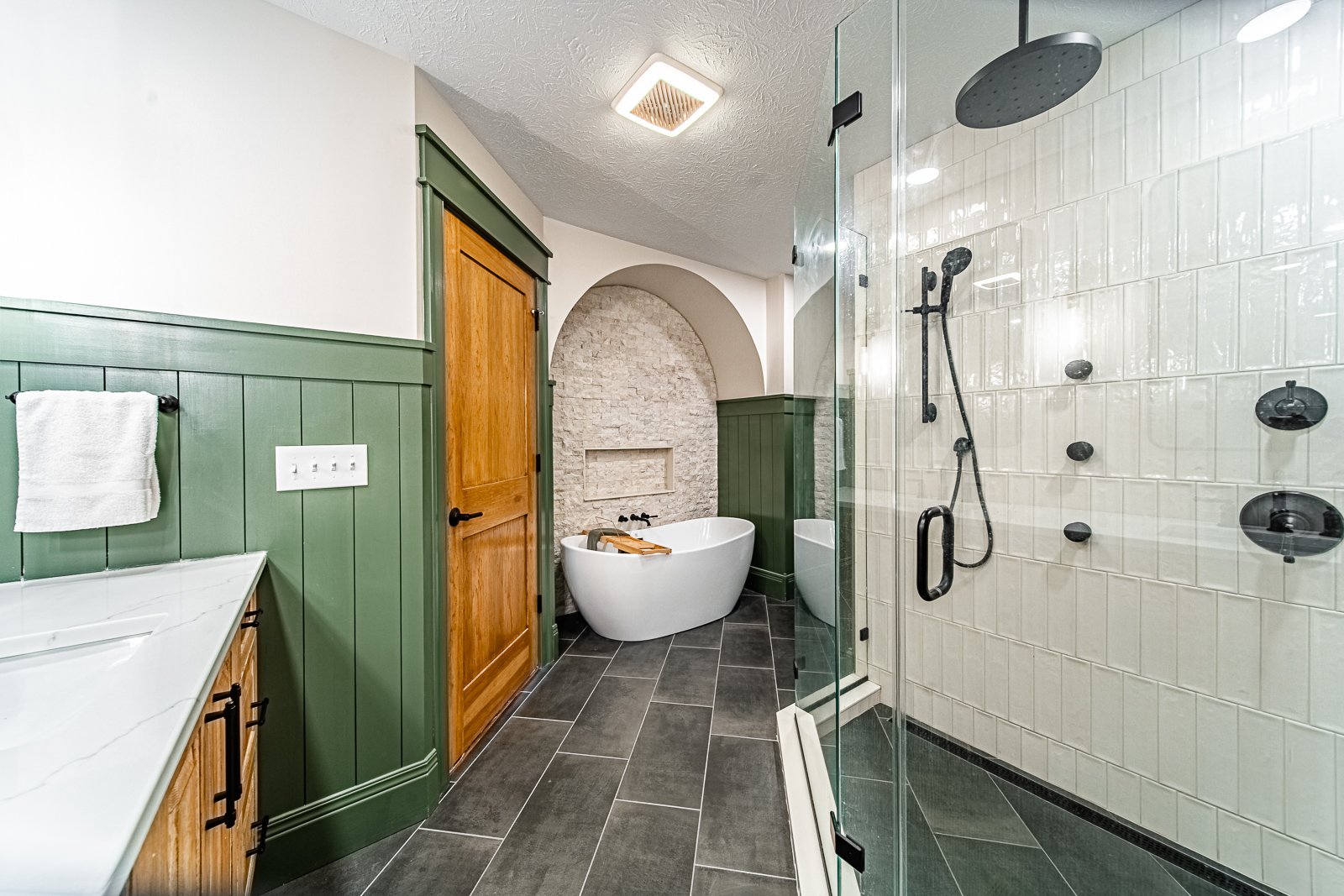
That said, a tub is worth keeping if you genuinely use one and if no other bathtub exists in the home. A freestanding soaking tub, placed thoughtfully in the room, can be a beautiful and practical element. One detail worth keeping in mind: placement should allow you to clean all the way around it. A tub tucked into a tight corner creates a maintenance challenge that accumulates over time.
Storage deserves more attention than it often gets in bathroom planning. Nothing disrupts the feeling of calm more than a room full of visible clutter. Spas do not have things sitting out on every surface. A bathroom that aspires to that quality needs places to put things away, out of sight, so the room itself can breathe. Built-in cabinetry, deep drawers, and carefully planned storage at the vanity are not just organizational choices. They are design choices that determine whether the finished space feels settled or scattered.
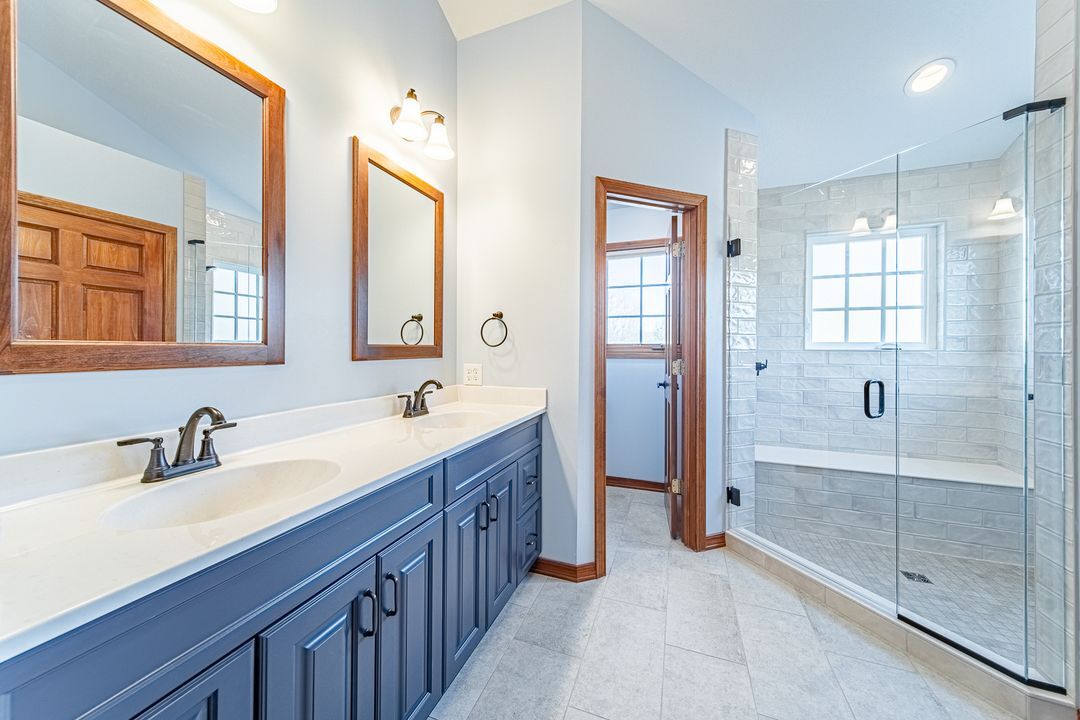
A water closet, which is a separate enclosed space for the toilet, is another element that consistently improves how a master bathroom feels to use. It adds privacy, reduces visual noise, and creates a sense that the room is organized around different kinds of use rather than compressed into a single open space. Double vanities serve a similar purpose, less about storage and more about removing the small daily friction of two people sharing one sink, one mirror, one set of outlets.

Lighting is one of the most powerful elements in bathroom design, and one of the most overlooked. A single overhead fixture produces light that is functional but flat. It does not flatter, it does not create atmosphere, and it offers you no control over how the room feels at different times of day.
A well-designed bathroom uses layered lighting: ambient light that fills the room evenly, task lighting at the vanity that is bright and accurate, and accent lighting that creates warmth and visual depth. Toe-kick lighting installed along the base of cabinets adds a subtle glow that serves two purposes: it creates atmosphere in the evening, and it guides you safely through a dark room at night without forcing you to turn on every light in the house.
Natural light is worth preserving and, where possible, expanding. Frosted or obscured glass maintains privacy while still allowing daylight in. If no exterior walls exist or seem feasible, skylights are a genuine option and asset. A sun tunnel is another practical solution that channels daylight through a reflective tube from the roof into the room, with no traditional skylight installation required.
Dimmer switches may be the single most affordable upgrade that changes how a bathroom feels. The same room can serve a focused, energizing morning routine and a quiet, unwinding evening simply by adjusting the light. That flexibility, the ability to shift the mood of the room without changing anything else, is what makes lighting such a fundamental part of the design.

In a bathroom designed for calm, materials do more than look beautiful. They shape how the room feels to occupy.
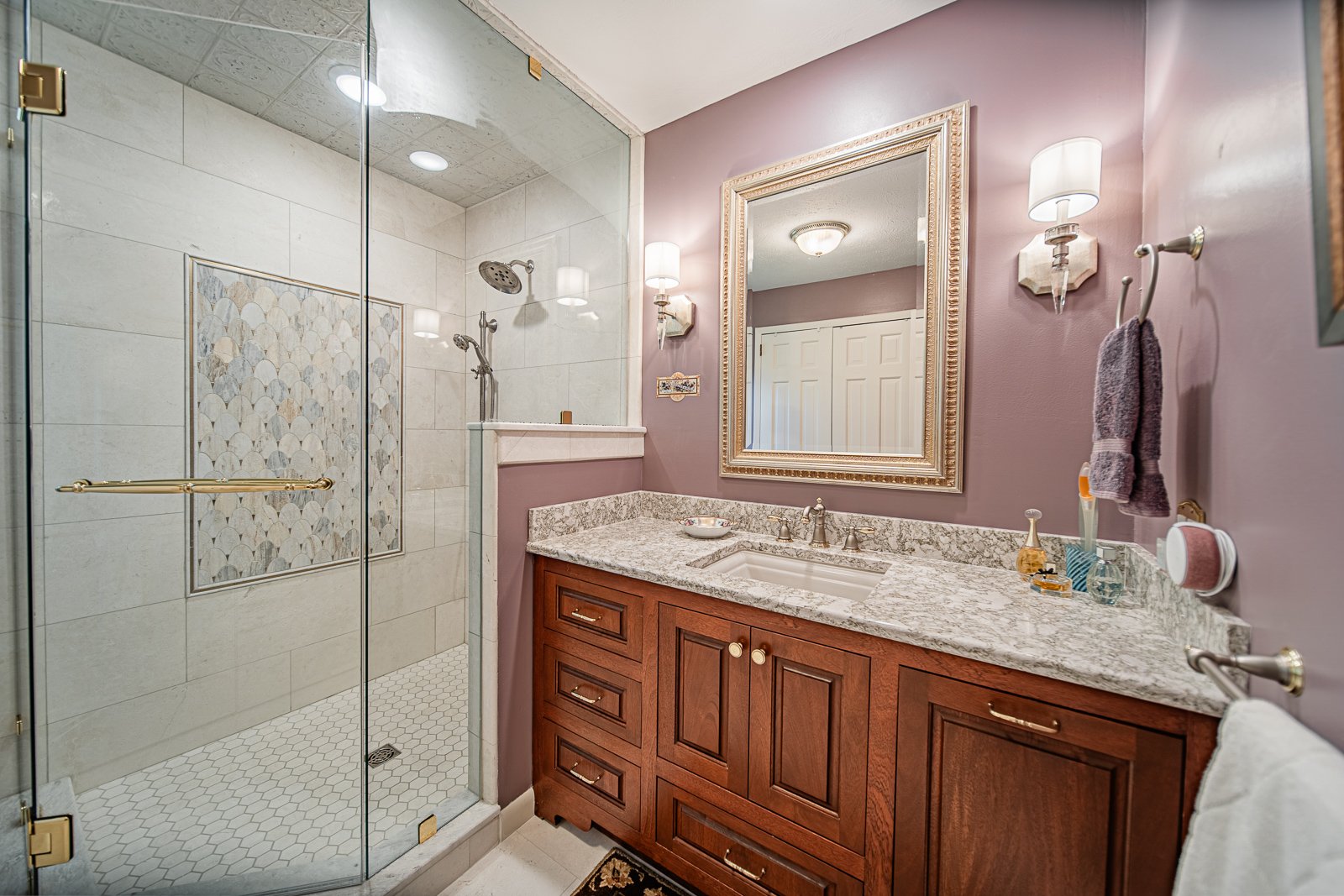
Natural stone, whether marble, travertine, or slate, brings warmth, texture, and a sense of permanence that manufactured surfaces rarely replicate. Large-format tile reduces the number of grout lines in the room, which creates a cleaner, more expansive visual field and makes the space feel larger than it is. Warm wood tones in vanities and accent elements soften what might otherwise read as a cold, hard room. Matte finishes on hardware and fixtures tend to feel more refined and quietly luxurious than high-gloss alternatives.
Heated floors are easy to underestimate until you have them. The experience of stepping onto a warm floor on a cold morning is small in the description and significant in practice.
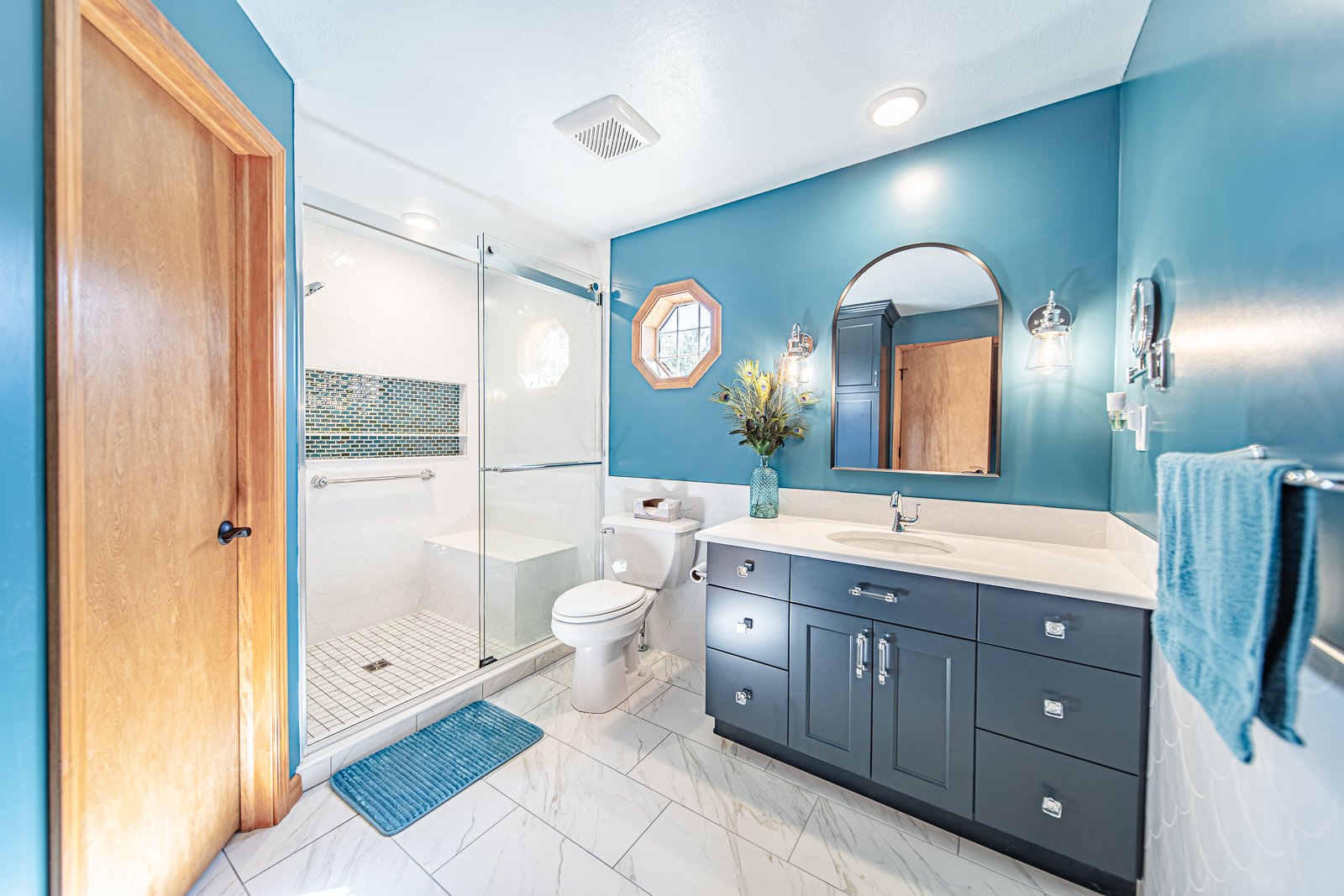
Color is worth thinking about carefully, because the palette of a bathroom sets its emotional register before anyone walks fully into the room. Neutral tones tend to create a calming effect for most people. But calm is personal. What feels serene to one homeowner might feel sterile to another. The right approach is to understand what you find restful and build from there, rather than following a rule that does not apply to you.
Spa-like bathrooms are often distinguished not by a single dramatic element but by a collection of smaller decisions that, together, create something that feels considered and complete.
A rainfall showerhead paired with a handheld wand gives you flexibility that a fixed showerhead cannot. Steam showers are a genuine luxury that some homeowners find transformative, though they require planning and are not the right fit for every project. Built-in niches for shampoo and soap look clean and intentional, and they are most effective when positioned out of the primary sightline so they contribute to visual calm rather than competing with it.
Towel warmers are practical and quietly indulgent in equal measure. Quiet exhaust fans are worth specifying over standard ones, because background noise in a room designed for calm is a detail that shows up every time you use the space. Speakers built into the ceiling or wall allow sound to be part of the experience without visible equipment cluttering the room.
None of these details requires a dramatic increase in budget. Most are decisions made during the design phase, where incorporating them is straightforward. Adding them later, after walls are closed, is a different conversation entirely.

The most thoughtful bathroom remodels are designed for the life you are living now and for the life that may arrive in ten or twenty years.
Walk-in showers with no curb or threshold are safer to enter and exit, more accessible for people with changing mobility needs, and no less beautiful than a shower with a traditional step. The difference is entirely functional, and it is one of those decisions that could make a big difference down the road.
Lighting is worth calibrating for the future as well as the present. As vision changes with age, more light becomes genuinely useful, not just atmospheric. Designing a bathroom with slightly more lighting capacity than you currently feel you need turns out to be a wise investment.
Blocking walls for grab bars during construction is one of the most cost-effective things you can do in a bathroom remodel. The blocking itself costs very little when the walls are already open. Installing grab bars after the fact, if the backing is not there, means relying on anchors instead of solid backing or opening the walls again. A hand shower on an adjustable slide bar is similarly worth including, offering flexibility and ease of use that becomes more valuable over time. A built-in shower seat, whether fold-down or fully integrated, adds comfort and safety that many homeowners eventually come to appreciate.
For homeowners planning to stay in their home long term, there is one more consideration worth raising. Think about how the bathroom would function if you ever needed someone to help you use it. Wider clearances, a thoughtfully designed shower, and smart placement of fixtures can make that scenario, if it ever arrives, far more manageable for everyone involved. Designing for that possibility is not a concession. It is simply good planning.
A bathroom designed with care does not just look different from the one it replaced. It changes how you feel at the start and end of every day. That is not a small thing. The fifteen minutes you spend in your bathroom each morning and evening add up over the course of a year, a decade, a lifetime.
The right remodel is within reach for most homeowners who approach it with clarity about what they want and a design partner who can help translate that into real decisions. It does not require the largest possible budget. It requires asking the right questions before any selections are made, designing around how the room will actually be used, and making choices that serve both the life you are living today and the one that lies ahead.
If you want to go deeper on what makes a bathroom remodel truly successful, our free eBook, Designing a Better Bathroom Remodel, walks you through the decisions, trade-offs, and possibilities in more detail.
And if you are ready to start the conversation about your own bathroom, we would love to hear about it. Schedule a Home Remodeling Discovery Call with the Riverside team and take the first step toward a bathroom that finally feels the way it should.
Believe it or not, we spend a significant amount of time in our bathrooms every year between showering, grooming, and “escaping” or relaxing....
1 min read
Although a more closely-knit space, bathrooms are one of the most important rooms in your home. As the saying goes, “good things come in small...
Your bathroom is arguably one of the most important and complex spaces in your home, and like your kitchen it must capture an ideal blend of form and...