7 Mistakes to Avoid In Your Bathroom Renovation
Your bathroom is arguably one of the most important and complex spaces in your home, and like your kitchen it must capture an ideal blend of form and...
5 min read
Andy Haste
:
April 23, 2026
There’s often a quiet moment when you realize something in your home no longer fits.
It might happen when guests come over and you hesitate before pointing them toward the bathroom. Or early in the morning, when you flip on a harsh light and catch a glimpse of finishes that belong to another era. Sometimes it’s more obvious—a leaking shower, a cramped layout, a space that simply doesn’t work the way you live anymore.
But more often, it’s not just one issue.
It’s the feeling.
A bathroom that once served you well now feels disconnected from the rest of your home—and from your life today.
That’s where the shift begins. Remodeling isn’t just about replacing outdated materials. It’s about creating a space that supports how you live now—and how you want to live moving forward.
Most homeowners don’t wake up one day and decide their bathroom needs to change. The realization builds gradually.
Sometimes it’s the look. You may have a well-maintained bathroom, but the colors, materials, and finishes reflect a different decade. Soft pink or blue fixtures from earlier eras. Tiny fiberglass shower stalls in conjunction with oversized corner whirlpool tubs that take up space but rarely get used from the early 2000s.
Other times, it’s the function. A tight shower that feels restrictive. A layout that wastes valuable square footage. Lighting that makes the room feel flat or dim. In some older homes, it may even be a bathroom designed without a shower—something that simply doesn’t fit how most people live today.
And then there are the details. Hardware that dates the room. Mirrors and trim that feel disconnected. Ventilation issues that lead to lingering moisture or mold.
Individually, these may seem small. Together, they create a space that feels out of sync with the rest of your home.
Once you see it, you can’t unsee it.

After recognizing what feels outdated, the next question becomes more complex: what should it become?
This is where many homeowners hesitate.
You want something that feels fresh—but not something that will feel outdated again in a few years. You want to invest once and feel confident in your decisions.
That’s why most homeowners naturally gravitate toward timeless design.
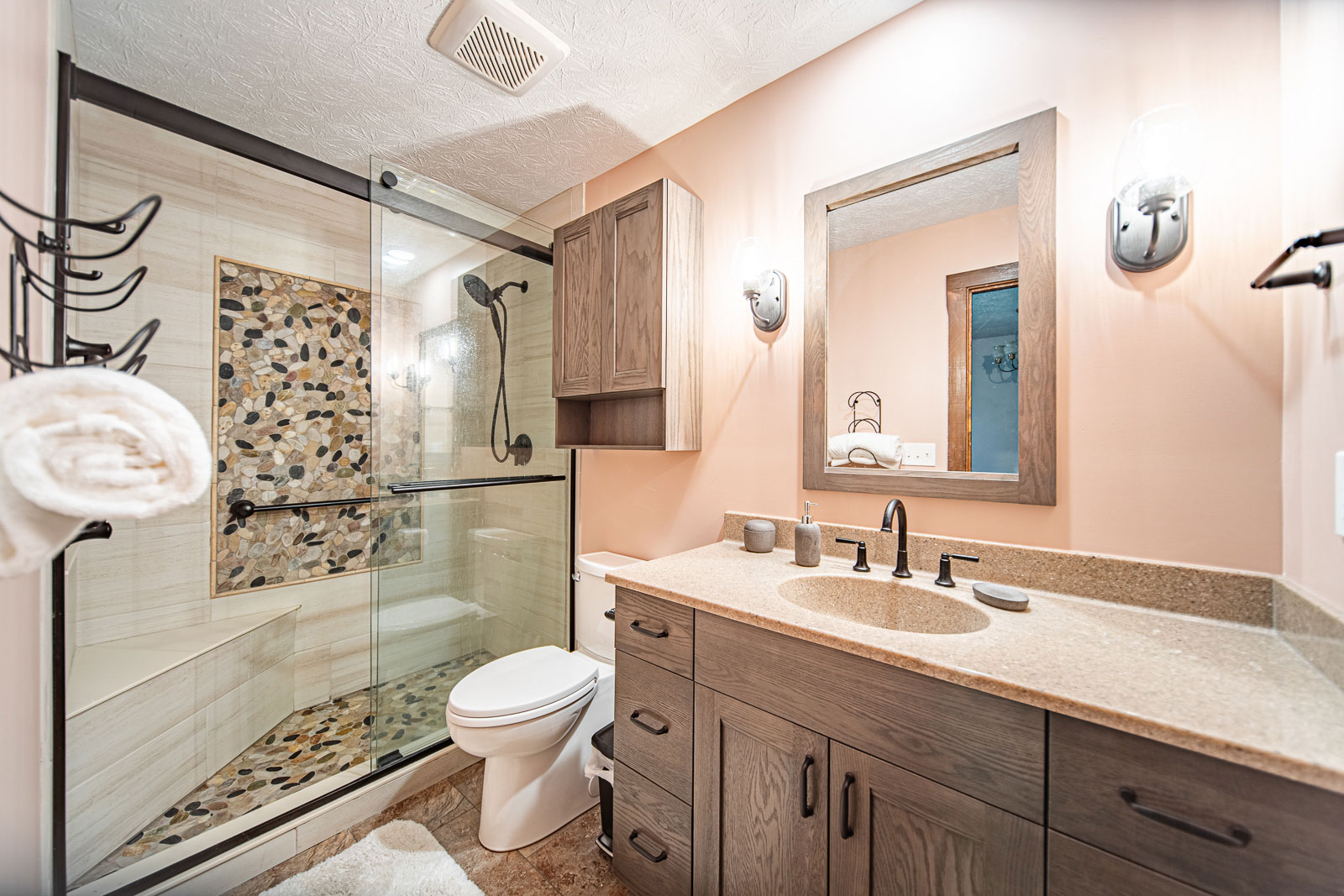
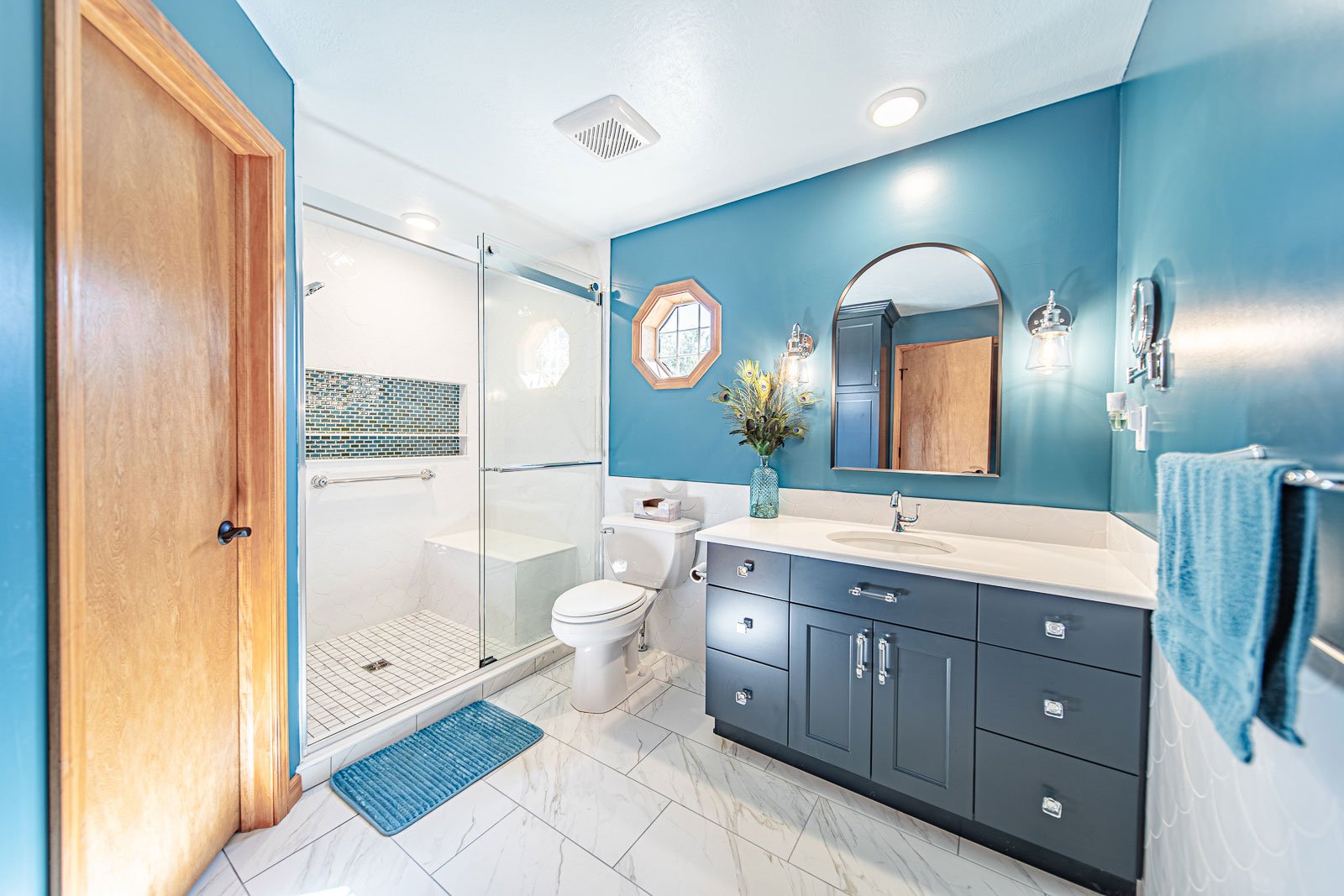
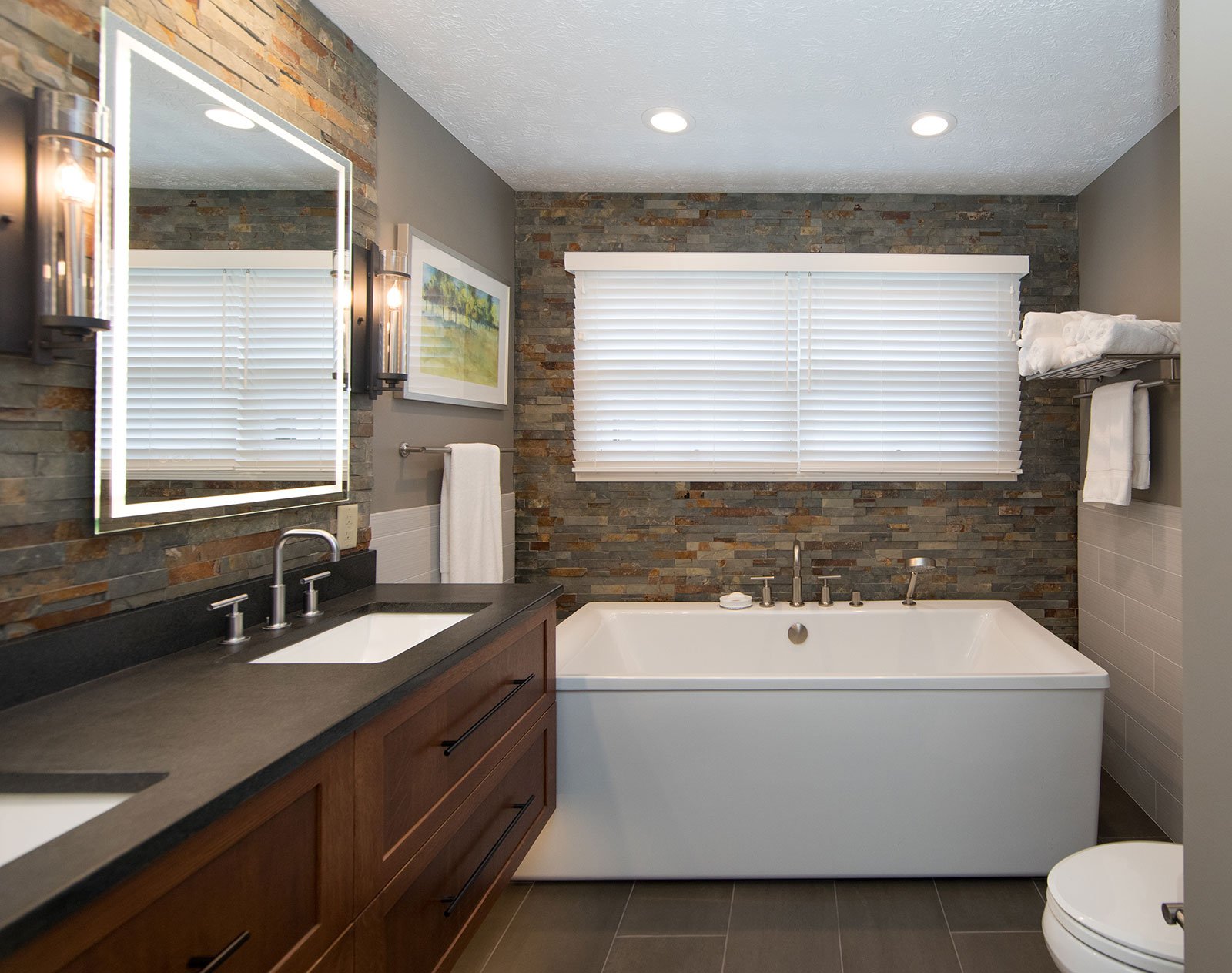
In practice, this often means starting with a neutral foundation. Soft whites, warm grays, natural tones. Materials like stone, wood, and porcelain that feel grounded and enduring. Clean lines. Simple patterns. Cabinet styles, like shaker profiles, that continue to hold up over time.
But timeless doesn’t mean limiting. It means flexible.
Instead of locking into a highly specific style, many homeowners prefer a design that allows for evolution. If your home has a strong architectural identity, you may lean into it. But for most homes, the goal is to create a space that feels cohesive without feeling confined.
Trends still have a place—they just need to be used thoughtfully.
The key is knowing where to incorporate them. Elements like mirrors, lighting, and accessories can bring personality and be updated more easily over time. More permanent choices, like tile or cabinetry, benefit from a more timeless approach.
This balance helps you avoid regret—and it’s where thoughtful design guidance becomes invaluable.

Once the direction is clear, the focus shifts to the details—the finishes, fixtures, and colors that bring the space together.
This is often where the process can feel overwhelming.
There are countless options. Materials, colors, textures, metals, patterns. It’s easy to feel like every decision carries weight.But a well-designed bathroom doesn’t come from choosing the “perfect” individual pieces. It comes from how those elements work together.
Consistency matters more than any single selection.
When finishes are coordinated thoughtfully—when metals complement rather than compete, when colors flow naturally, when materials feel connected—the space begins to feel calm and intentional.
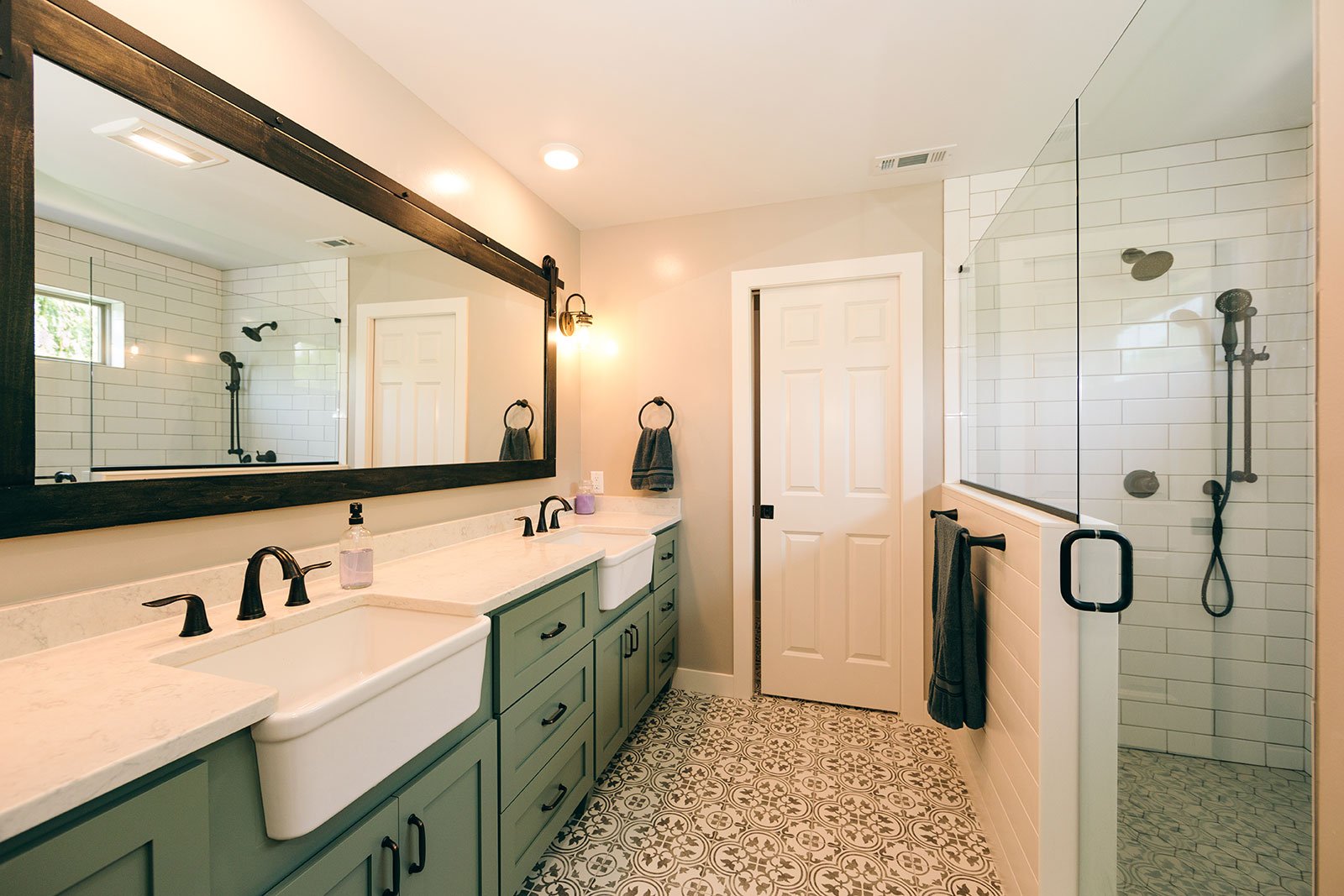
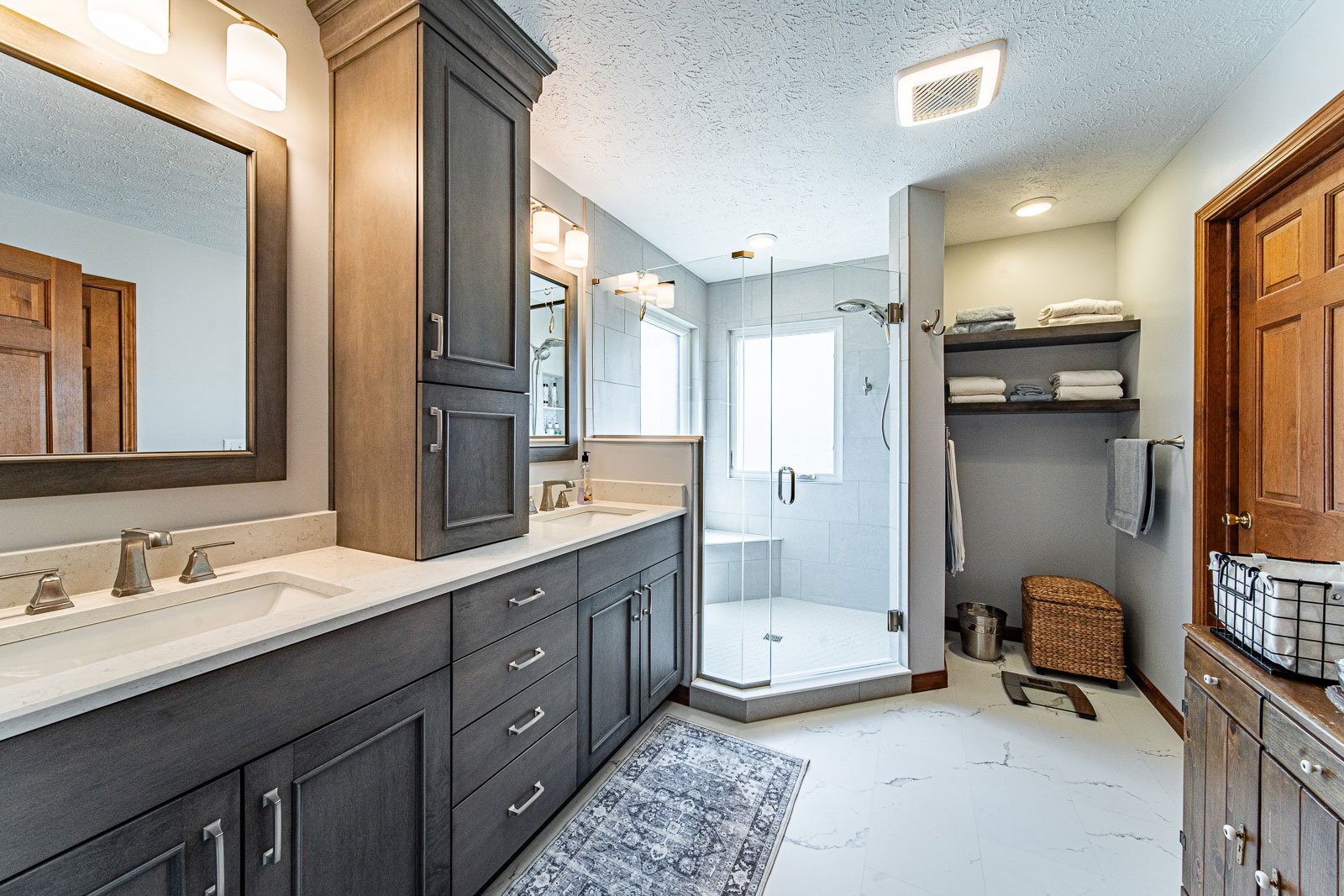
For many homeowners, the real value of working with a design-build team isn’t just access to options—it’s clarity within those options.
Instead of sorting through everything, you’re guided toward a curated set of choices that align with your goals, your style, and your budget. The noise is filtered out. The decisions become more manageable.
And the process becomes more enjoyable.
Even the most beautiful bathroom will fall short if it doesn’t function well.
This is where remodeling becomes truly personal.
A thoughtfully designed bathroom begins with understanding how you use the space every day. Not just how it looks—but how it feels to move through it.
For many homeowners, this leads to one of the most impactful changes: rethinking the shower.
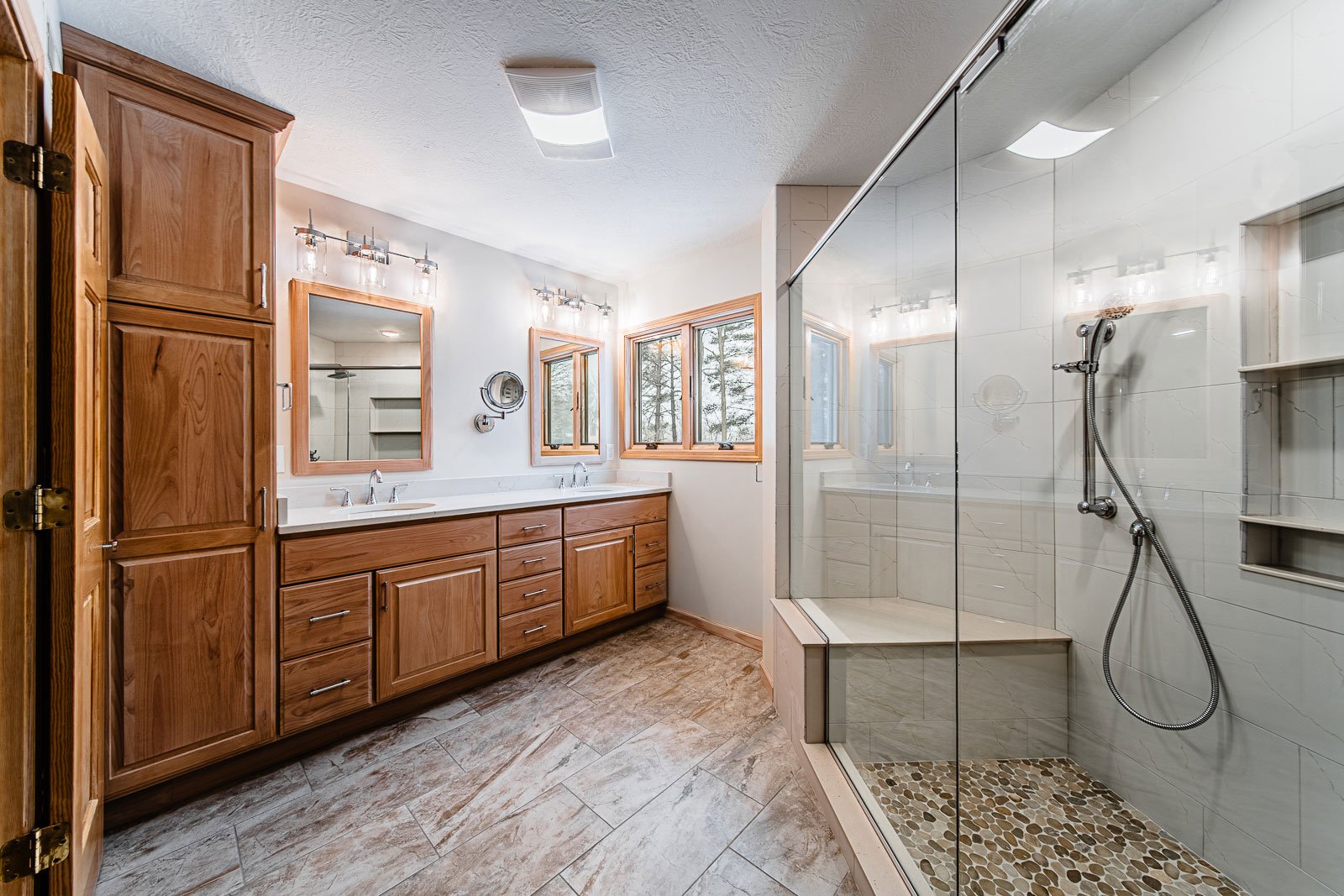
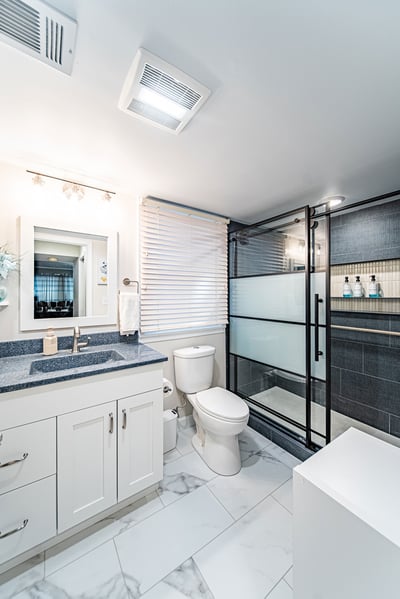
Oversized tubs that rarely get used are often replaced with spacious, well-designed showers. Thoroughly thought out with built-in niches for storage, multiple shower heads or handheld options and details like a ledge for shaving or features designed for relaxation.
All of the small details are not just upgrades. They are design decisions rooted in function for daily use.
And the impact extends beyond the present.
The best designs also consider the future. Simple decisions—like adding structural support behind the walls for future grab bars—can make the space safer and more adaptable over time without changing how it looks today.
Vanity design follows the same principle. Do you prefer to stand or sit while getting ready? Do you need better storage? Better lighting? A more comfortable layout?
When these questions guide the design, the result is a bathroom that continues to feel right—not just today, but for years to come.

A bathroom doesn’t exist in isolation—or at least, it shouldn’t feel that way.
One of the most overlooked aspects of remodeling is how the space connects to the rest of the home.
When a bathroom is updated without considering surrounding spaces, it can feel disconnected. Even if the design is beautiful on its own, it may not align with the overall character of your home.
That’s why consistency matters.
This doesn’t mean everything needs to match exactly. It means the materials, tones, and overall feel should complement what exists—or what you plan to create over time.
In some cases, homeowners intentionally start with the bathroom as the first step in a larger transformation. The design may feel slightly ahead of the rest of the home at first, but it sets the direction for future updates.
A remodeling master plan can help ensure each phase contributes to a cohesive whole.
Because the goal isn’t just to improve one room—it’s to elevate how your entire home feels.

When everything comes together, the transformation is more than visual.
It’s experiential.
A bathroom that once felt like an obligation becomes a space you genuinely enjoy using. Mornings feel more comfortable. Evenings feel more relaxing. Daily routines become smoother.
For some homeowners, the impact is practical. A safer layout. Better lighting. Improved organization.
For others, it’s emotional.
A sense of pride when guests visit. Confidence that the space reflects the rest of the home. Relief that something long overdue has finally been addressed.
And often, there’s a common reflection:
“We should have done this sooner.”
Because the value of a well-designed bathroom isn’t just in how it looks. It’s in how it supports your life, every single day.

If you think back to that initial moment—the hesitation, the frustration, the quiet awareness that something isn’t right—it becomes clear that updating a bathroom is about more than aesthetics.
It’s about alignment.
Aligning the space with how you live today—and how you want to live tomorrow.
Many homeowners wait longer than they intend to. It’s easy to delay, but bathrooms don’t improve with time. Materials continue to wear. Costs continue to rise.
The real cost of waiting isn’t just financial.
It’s the missed opportunity to enjoy your home more fully sooner.
If you’re starting to recognize that feeling in your own space, the next step isn’t to choose tile or fixtures.
It’s to step back and understand what you truly want the space to become—and how it should support your life.
If you’d like clarity on what’s possible in your bathroom—and how to approach the process in a thoughtful, structured way—the next step is a conversation.
A Home Remodeling Discovery Session gives you the opportunity to talk through your space, your goals, and the challenges you’re experiencing. You’ll gain insight into what’s possible, what to consider, and how a well-planned approach can bring everything together.
If you’re ready to take that next step, you can schedule your session here
Even if you’re early in the process, this conversation often brings the clarity and confidence homeowners are looking for.
Your bathroom is arguably one of the most important and complex spaces in your home, and like your kitchen it must capture an ideal blend of form and...
Believe it or not, we spend a significant amount of time in our bathrooms every year between showering, grooming, and “escaping” or relaxing....
1 min read
Can you tell the difference between these two pictures? On first glance both images appear pretty similar. While they are of the same space, the...